

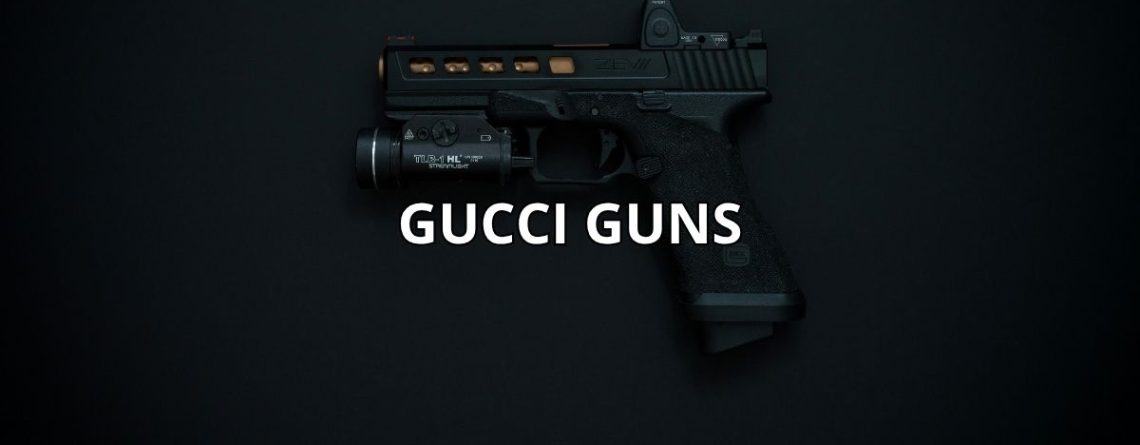
“What do you think about the P365?”
“It’s a good gun. I carry one.”
“Did you put a red dot on it?”
“My little 365? No. I only have a red dot on one of my full-size guns.”
“Yeah, I am thinking about getting one and putting on a red dot and upgrading the trigger. I also want to change out the grip module and port the barrel.”
“Cool.”
“Yeah, I was using a buddy’s and I noticed that at 25 meters there is a slight downward variance that…”
I get into these conversations a lot.
I don’t really mind them. In fact, from a “gear nerd” standpoint, they can be somewhat entertaining. But it is also imperative to keep things in perspective.
Many, many years ago… when I was transitioning from being a long-distance shooter to a hunter I had an interesting conversation at my local range.
I had just purchased my Winchester Model 70 chambered in 30.06.
This was my first real hunting rifle. I had been shooting long distance for years, but that skill set… and frankly the equipment used… is substantially different than what we use for big game hunting.
For my first few hunts I had been using an extraordinarily cheap Remington 710 chambered in .270. (I had actually bought the thing from Walmart… Remember those days?)
Now I had my first “real hunting rifle”… and, for all intents and purposes, I was treating it as a long-distance weapon.
One of the things I did when I was competing was to develop a special load for each rifle I owned. The Holy Grail of shooting was sub MOA (minute of angle) groups at 200 meters. This was rarely achieved, but it was the goal. Sub MOA groups at 100 meters, on the other hand, was completely within reach with the proper equipment.
This typically meant not bothering with factory ammunition and, instead, developing a specific load for each weapon. To do this was an arduous process. Variables needed to be eliminated, so testing had to take place on a bench, usually with the weapon mounted in a shooting sled and shooting at a very specific target.
I would handload several varietals, typically four to five rounds per varietal.
I would then shoot at a target at 100 meters. That target would actually be a collection of ten individual targets, each about the size of playing card. I would shoot a three-shot group of varietal number one on target number one. I would then shoot varietal number two on target number two, and so on.
Once I was finished I would study the targets. The varietal that had the tightest grouping (hopefully sub MOA) would then be the one I would produce in bulk for that particular rifle.
(I’m leaving out the part where I cleaned the barrel between each varietal… like I said…this was a long process.)
Anyhow, I was doing the same thing with the 30.06 that I intended to use on mega fauna.
Next to my bench, I had a more powerful spotting scope on a tripod. What I did not have that day was my shooting sled. For reasons that escape me I had decided to simply use sandbags during this trial.
I was also rushing the process.
This translated to a lousy shot every two to three shots. It was not the gun, nor the ammo… it was me… jerking the trigger. I was getting annoyed. This single errant shot per target was not going to give me the data I was looking for.
An older man came up and was watching me. He could also see I was getting frustrated. He wandered over to the spotting scope and looked at my targets.
“Pretty good grouping!”
He was, of course, correct. Even with the occasional trigger jerk, each of my three -shot groups was a cluster of two to three inches apart.
“Nah… I’m jerking on some of my shots. I’m trying to develop a load for this rifle.”
He looked back in the scope.
“This a hunting rifle?”
“Yeah.”
“Hmm… you must be going after something really small.”
He put me in my place. Yes, gear is important. But there comes a point where we start to get diminishing returns. If I wanted to be a hunter, and I spent all of my time working my gear, and none of my time learning the skill sets necessary to be an outdoorsman, I might have a fine piece of weaponry… but no target to shoot at.
Conversely, looking for the “perfect” shooting pistol, and spending no effort on defensive tactics, situational awareness, or judgmental use of force… well, let’s just say you might not get the opportunity to use it.



Comments (4)
Great perspective.
The other fascinating and sad part is how few hunters do any training whatsoever other than a few bench shots. Instead they spend $5K on a Gucci rifle. Then they try to launch rounds 400 yards cross canyon at a diminutive Coues deer and pose for pictures hiding the fact they gut shot the poor thing. Professionalism at arms applies everywhere.
After you cleaned the barrel between groups did you leave it wet or dry?
Amen
There’s a difference between exercise and training. Most people just exercise whether it’s at the gym, at the indoor shooting range with their handgun or on a flat range with their long gun. Training on the otherhand has a purpose and that sets those people apart from the ones who just exercise and admire their shit.