

SHOT 2026
Every year I write this blog. After SHOT (what SHOT is in a second), I write a blog about what I have seen. This year is a bit different.
“SHOT” is our industry show. It is the “Detroit Auto Show” for guns. It is held every year in January at the Sands Convention Center in Las Vegas… and it is huge.
The concept is fascinating. Thousands (yes, thousands) of vendors hang out their shingles to try to “sell” their products to industrial buyers. The only people supposedly allowed in the show are those of us who are in the firearms industry. Candidly, this is a loose requirement. There is a variety of methods for “getting into” SHOT… and you can clearly tell who is an industry participant and who is not. Incidentally, this is not necessarily what you would think; many of the industry participants look more like accountants than operators.
One of the things I usually write about is the market trends the industry is expecting. All of these vendors are looking at market data throughout the previous year and creating products they believe will sell in the next fiscal year. The data is the data and, as a result, there is a sort of organic standardization of what the industry thinks we want. Some years the “it” is “black scary rifles”. Other years it’s “less lethal”. Over the last couple of years, there have been more training tools being hocked, some excellent… some… well, not so much. Regardless, that market segment is (thankfully) growing.
For the last 14 years I have walked the floor, and have looked to see “what is up” to report back to you.
This year I really can’t.
I never got a chance to “walk the floor”.
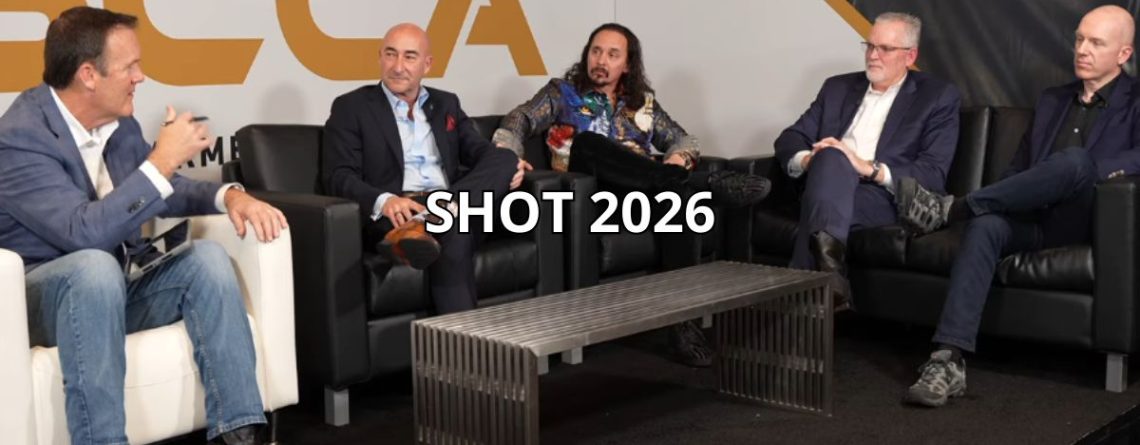
This year I was speaking. USCCA had invited me, as well as three other lawyers, to sit on a stage and be interviewed and answer questions.
It was a fantastic experience for me.
If you have ever watched the USCCA YouTube channel you would recognize my colleagues: Tom Grieves out of Wisconsin, Dave McDermott out of Illinois, Mike Price out of Texas, and me.
These three gentleman are giants. They are all exceptional defense attorneys, and each has his own methodology grown out of his unique geography. Tom and I tend to be more professorial in our approach to the 2A jurisprudence. Dave and Mike take cases to actual trial way more often than Tom or I because of the requirements of the state law mechanisms of their respective jurisdictions.
What the three of them share: They are wickedly smart… scary smart. Iron sharpens iron, and these guys were keeping me razor sharp. It was an honor to be on the same stage with them.
There was one thing Tom and Mike both shared that I found particularly interesting though. The question was asked by our host: “What is the most unique development in self-defense cases you have seen in 2025 and going into 2026?”
Both said a distinction needs to be made now between three key demographics and how cases are litigated. There is a distinction now between cases that occur in urban, rural, and suburban jurisdictions.
Politics mean everything, and the politics that play out in these cases are somewhat counterintuitive. The juries in rural jurisdictions tend to be more amenable to self-defense, and DAs in rural areas are sympathetic to self-defense claims.
DAs in urban areas are very unsympathetic to self-defense, yet juries often hand defendants acquittals because they know the realities of what goes down in the city.
It is the suburban world that causes the most problems in self-defense cases.
Here there are often unsympathetic DAs, coupled with unsympathetic juries.
I brought up the fact that this does not seem to be exactly what we see in the suburban sprawl of Southern California. It was Dave McDermott who pointed out that SoCal is a beast unto itself. The suburban landscape of Southern California is so large, that the distinction between the three demographics gets blended together.
He has a point, of course. While Orange County has been considered a suburban county to LA County, that really belies the point. Orange County is a major metropolitan entity in its own right. That, and the suburbs, go right to the edge of the wild. “Rural” is oftentimes completely surrounded by suburbs.
Case management strategy differs jurisdiction to jurisdiction and, to an extent, law firm to law firm. What we all agreed: Each case is different.
Watch Self-Defense Attorneys Reveal The Legal Traps Every Concealed Carrier Needs to Know | SHOT Show 2026





Comment (1)
We saw the podcast on youtube and it was very interesting to hear perspectives from the different States.