

There are inflection points in our lives when we are introduced to people who will ultimately become heroes to us. Ironically, this is not always apparent at the time of the meeting. Sometimes it takes several years of retrospective analysis before we realize how impactful they were to our development.
What is equally ironic (and somewhat necessary, frankly) is the fact that our interpretation of people may very well bear little resemblance to how they actually are or how they see themselves.
We look at ourselves as complex creatures and are well aware of the inconsistencies in our desires and our behaviors. We do not operate in a linear fashion. Classic economic theory simply does not apply to “us”. We are irrational, inconsistent, unpredictable, and multifaceted. We know this about ourselves because we are… well… ourselves. For others, though, this will never do. Our ability to have a functional society is completely dependent on the predictability of others’ behavior and, by extension, the competencies they outwardly display. This competency, in turn, manifests into a societal hierarchy system. Within a society (be it a country, a principality, or a group of friends) a hierarchy of competency does exist. It is inevitable. This is how we are built. When the trappings of power exist within the office of individuals, yet their competency wanes, there is a social disconnect. This is what often results in revolutions or coups.
Yet, even the supposed “incompetence” of social leaders is inherently one-dimensional, often defined not by empirical evidence, but by the desires put forth by those who would seek to replace them.
Having articulated the basic premise, it is now time to introduce you to one of those “one-dimensional” heroes of my past: Vern Berton.
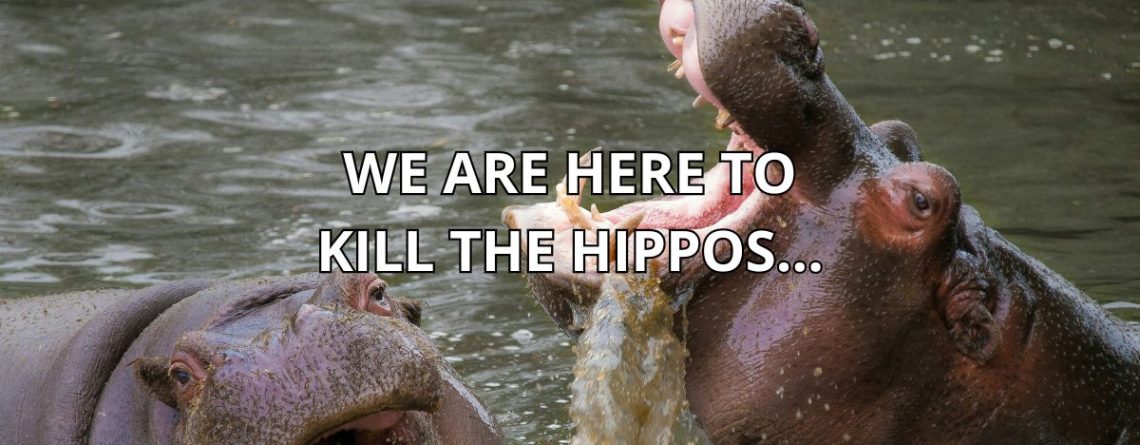
Vern and I worked at Disneyland together back in the late 1980s. We were Jungle Cruise skippers together and kept the world safe from marauding plastic hippos by shooting at them with Smith and Wesson .38 revolvers each time we took our guests through the “hippo pool”. (I have always shuddered to think what would have actually happened if someone were to shoot at a real hippo with nothing more than a .38. I suspect they would not have been alive to report the results.)
I was young when I met Vern. He was in his late 20s I think, and I was 16. (I had lied about my age and claimed I was 18, the minimum age necessary to work the Jungle Cruise. Back then we could get away with that. Even with this transgression, the world continued to revolve around the sun and western civilization did not collapse.)
Vern was magnificent. When I reference his presence as reminiscent of a Greek god, I do not speak in hyperbole. He was just over six feet tall and probably weighed in at 225 lbs. I suspect that his body fat percentage was under 15%. This dude was ripped.
His charisma was palpable, not just as it related to me, but to my other skippers and the guests in the park. He was, quite literally, a magnate and we all strove to be in his orbit. His ability to hold the attention of an audience was obvious. He also had something that most of us did not have… the ability to be truly funny without the need for self-deprecation. His comedic timing was off the charts.
As budding performers we knew that Vern would “make it”… it was inevitable. He would be, we strongly believed, the next leading man to dominate the silver screen.
He also displayed the more amorphous concept of sprezzatura. This Italian phrase comes from the Book of the Courtier by Baldassare Castiglione. In 1528 he wrote about the qualities necessary for the “perfect” courtier. We now refer to these qualities of being indicative of a “Renaissance man”. While a command of various subject matters is a quintessential component, it was his description of sprezzatura that always intrigued me the most.
Sprezzatura is a form of elegance. More importantly, it could also be seen as a form of casual indifference. The individual has achieved such a level of competency and self-assurance (note: not arrogance by any measure) that he seems to achieve everything with what could be described as “effortlessness”. He wills the “thing” or the “act” and it manifests; it is that simple.
Vern was the very epitome of sprezzatura.
From entertaining a small child with cerebral palsy and making her feel as though she was the center of the universe, to entertaining the large collection of women who seemed to figure out how to get him as their skipper, Vern did it all with effortless perfection.
Then he was gone.
Vern put in his two weeks and left the park when I was just shy of 19.
None of us know what ultimately happened to him. During our reunions his name inevitably comes up and, of course, there are the rumors: sightings of him in comedy clubs in Florida, performances in Europe, even supposedly someone mentioning that they saw him at a bar in Hong Kong.
But to me, Vern was, and will always remain, “perfect”, and his departure from our lives so many years ago has a certain degree of sprezzatura as well, does it not?








Comments (3)
Fascinating. Love the title
Your comment: “Sprezzatura is a form of elegance. More importantly, it could also be seen as a form of casual indifference” reminds me of the best book on leadership I’ve read called “A Failure of Nerve” by Edwin Friedman. He would suggest that Vern, at an early age, had already become a man of “non-anxious presence” I believe. Alas, there are many in this country that resist and sabotage such a leader; they don’t like someone who isn’t intimated by the masses and goes along to get along, and frankly, isn’t like them…God save us from such.
His personality and sudden disappearance has an Ernest Hemingway flare!