

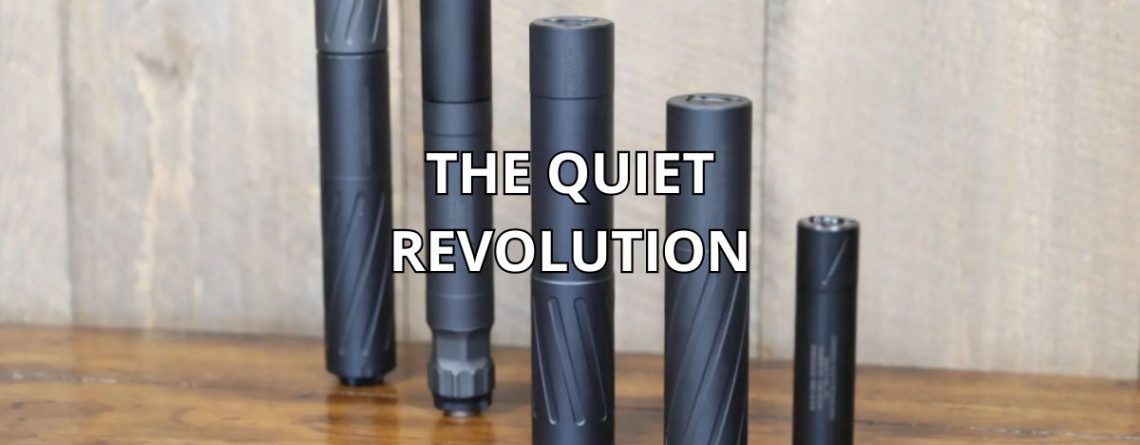
The Quiet Revolution: How the One Big Beautiful Bill Could Transform Second Amendment Rights
The streetlight outside the window provided a muted illumination through the mini-blind slats. Outside was dismal. It was not quite raining, just a persistent drizzle that blackened the pavement and created amber halos around the street lamps. I leaned against the edge of my office desk and studied the news alerts lighting up my phone. The House had just passed what supporters were calling the “One Big Beautiful Bill”, completely removing suppressors from the National Firearms Act (NFA).
I smiled slightly. The irony wasn’t lost on me. In the movies, suppressors, or “silencers” as Hollywood erroneously calls them, are portrayed as the tools of assassins, creating that signature “pfft” sound as the villain dispatches his round without alerting anyone in the next room. The reality, as any firearms expert knows, is far different. A suppressed firearm is still loud, typically around 130 decibels, about the same as a jackhammer. The device simply reduces the sound to levels less likely to cause immediate hearing damage.
Yet, for decades these safety devices have been regulated under the 1934 National Firearms Act with the same stringency as machine guns, requiring a $200 tax stamp, extensive background checks, registration, and a waiting period that can stretch to nearly a year… all for what is essentially a muffler.
And now, with little fanfare outside the firearms community, the House has voted to change that.
I picked up my phone and dialed a colleague who works as a legislative analyst in D.C.
“So, it actually passed,” I said when he answered.
“It did,” he confirmed. “But don’t pop the champagne yet. It still has to get through the Senate.”
“What are the odds?”
He paused. “Better than they’ve ever been, but still an uphill battle. The Firearms Policy Coalition and over 30 other organizations are pushing hard for it. They’re calling on Johnson and Thune to end the suppressor tax scheme in reconciliation.”
I nodded, though he couldn’t see me. “And the White House?”
“Supportive. It was part of the campaign platform, after all.”
After we hung up, I turned to my computer and began drafting notes. This wasn’t just about suppressors. This was about a fundamental shift in how Second Amendment rights are being approached in Washington. For decades, the strategy had been defensive, fighting against new restrictions. Now, for the first time in generations, there was serious momentum toward rolling back existing federal gun control measures.
The suppressor provision wasn’t the only Second Amendment issue moving through Congress. The Concealed Carry Reciprocity Act (HR 38) is gaining traction, with multiple state attorneys general publicly urging its passage. Alabama AG Marshall is pushing lawmakers to pass the bill, emphasizing that “Congress has the power to resolve this issue.” South Carolina’s AG Wilson similarly urged Congress to act.
If passed, the legislation would require states to recognize concealed carry permits issued by other states, similar to how driver’s licenses work. For citizens in restrictive states like California, New York, and Maryland, this could represent a significant expansion of their ability to exercise their Second Amendment rights while traveling.
Meanwhile, at the Supreme Court, the justices are preparing to hear a major challenge to a federal ban on gun possession by certain individuals. And the NRA has taken its fight against Florida’s under-21 gun purchase ban to the high court, potentially setting up another landmark Second Amendment decision.
All of this is happening against the backdrop of the Court’s 2022 decision in New York State Rifle & Pistol Association v. Bruen, which fundamentally changed how Second Amendment cases are decided. No longer could restrictions be justified merely by claiming they served an important government interest. Now, the government must demonstrate that regulations are consistent with the nation’s historical tradition of firearm regulation… a much higher bar.
The effects of Bruen are still rippling through the legal system. The Department of Justice recently settled suits with a gun parts maker, in what firearms’ advocates consider a significant win, ending a ban on forced reset triggers. Washington gun owners filed suit claiming the state was “taking aim at speech” related to firearms. And in Missouri, the Supreme Court refused to reinstate a state law that barred police from enforcing federal gun restrictions, a reminder that while the Second Amendment is ascendant, there are still limits to how far states could go in nullifying federal law.
At the state level, the picture is equally dynamic. Washington residents will soon need a state permit to buy guns under a new law. Colorado passed legislation stripping car thieves of their Second Amendment rights, while Bent County, Colorado declared itself a “Second Amendment Sanctuary” in opposition to new firearm training requirements. In Rhode Island, Charlestown is considering a similar sanctuary ordinance.
I closed my laptop and walked to the window. The rain had stopped, but the pavement remained slick and black. I thought about how the legal landscape for gun rights is shifting like the weather, sometimes in subtle ways, sometimes dramatically, but always in motion.
The “One Big Beautiful Bill” and its suppressor provision might seem like a small technical change to those outside the firearms community. But to those who understand the history of gun legislation in America, it represents something much more significant: recognition that some aspects of our firearms regulatory regime are based more on fear and Hollywood fiction than on public safety or Constitutional principles.
As an attorney who has spent years navigating the complex web of federal and state gun laws, I could appreciate the magnitude of this potential shift. The NFA has stood largely unchanged since 1934, a relic of the Prohibition era’s gang violence and the Great Depression’s social upheaval. Modifying it would be more than a policy change, it would be a statement about how we interpret the Second Amendment in modern America.
Whether the bill will ultimately become law remains to be seen. The Senate has proven to be the graveyard of many promising Second Amendment reforms in the past. But something feels different this time… a momentum that hasn’t existed before.
I returned to my desk and began drafting a more formal analysis for my clients. They would need to understand not just what was happening, but what it meant for their rights and responsibilities as firearms owners. In a legal landscape that is shifting by the day, staying informed isn’t just good practice, it is essential.
And as I typed, I couldn’t help but reflect on the words of Justice Clarence Thomas in the Bruen decision: “The Second Amendment is not a second-class right.” After decades of being treated as precisely that, it seemed the Amendment was finally receiving the respect the Constitution demanded.
The question now is how far this quiet revolution will go, and what America’s relationship with the Second Amendment will look like when it is complete.



Comments (3)
2 things bother me. 1. The Supreme court has refused to review several anti-guns restrictions by the states and is not enforcing Bruen. 2. Federal courts are usurping Executive and Legislative power and authority. I read 180 times Fed courts have ruled against Pres Trumps authority. The Constitution, imo, set the Court as the weakest of the equal but separate branches. However, with Marbury vs Madison, the court gave itself the power of judicial review. I think now, the court has become the strongest of the Federal branches of government. I don’t think it is wise to let over 400 Federal unelected judges to decide on an individual basis what the populace has voted for.
I would assume that even if suppressors are removed from the NFA they would still be illegal in CA?
“Shall not be infringed.”
All gun laws, rules, regulations, taxes, permits, & licenses cede power & control to potential tyrants.