

Well…
As many of you know, we have been hyper-focused on the Supreme Court the last few weeks. While the opinion authored in USA v Hameni was “nice”, correctly decided, and philosophically “interesting” in my opinion, it did not really “move the bar” on Second Amendment jurisprudence.
Then we got the decision in Wolford v Lopez. That one was, indeed, more impactful on 2A legal work and, as we discussed last week, will have a huge impact (both for good and bad) on Second Amendment challenges going forward. (Remember: The State now enjoys two periods of time where it can cull together examples of legislation that are relevantly similar or analogous to the challenged law, both 1791 and 1868.)
But these cases have all been what we call “behavior” cases.
In fact, there has not been a “hardware” case decided by the Supreme Court since 2016, well before the new Constitutional test established in Bruen in 2023. And we have been pushing for one.
The biggie that we here in California have been watching is Duncan v Bonta, our challenge to the California standard capacity magazine ban. The Supreme Court has just not had the interest (or the stomach?) to take up the case… but it also has not outwardly rejected it either. It has been resisted for consideration more now than any other case in U.S. history. (Who knew a simple metal box capable of holding more than ten cartridges would be so difficult to adjudicate!)
Well, the Supremes, quite literally at the very last moment, kicked Duncan down the road till next term. This is not altogether a horrible outcome, I suppose. The stay of enforcement for those who acquired “Freedom Week” magazines remains in effect, so that is a good thing.
But, what the Supremes did do might make Duncan somewhat moot.
There were two cases up for consideration (granting of certiorari or “cert”) that, while interesting, really would not affect places like California (more on that in a bit).
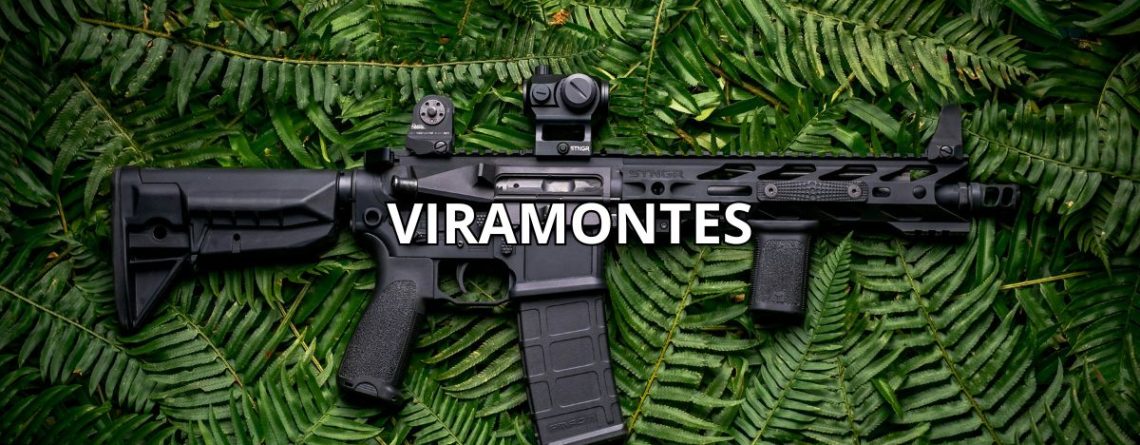
The first one was Viramontes v Cook County and the other was Grant v Higgins. Viramontes challenges an Illinois statute that prohibits the possession of an AR-15 (and similarly situated semi-auto rifles) and Grant essentially does the same thing, but against a Massachusetts law.
The Supreme Court has consolidated both cases (which makes sense from a judicial economy perspective) and granted cert. Henceforth the case will be referred to simply as Viramontes v Cook County, or simply “Viramontes” when we talk about it.
It is, by definition, a “hardware case” and will most likely generate a firm understanding of what “common use” is.
So, many of you may remember when Justice Kavanaugh was going through his confirmation hearings, Senator Diane Feinstein asked him if he believed AR-15s were in “common use”. He answered, “of course”. After all, they are the most widely owned rifle in America. She was flummoxed. She seemed absolutely incredulous. “How could he possibly say the AR-15 was in ‘common use’?” Kavanaugh seemed as perplexed by her confusion as I was at the time.
Well, now we know.
In the opinion of Heller v District of Columbia we saw the restatement of the “common use” test. The Second Amendment protects arms that are in common use for lawful purposes such as self-defense.
The various anti-gun legislatures have altered this to read: The Second Amendment protects arms that are in common use for the lawful purposes of self-defense.
That subtle change in language has big implications. After all if “self-defense” is the only thing the Second Amendment protects, well, a whole host of activities, as well as hardware, would fall outside the scope of 2A protection.
That moves us to Bruen. NYSRPA v Bruen created our now two-part test. When petitioners challenge the law, they must first explain how that challenged law diminishes their Second Amendment right to keep and bear arms. Once Step One has been satisfied, the statute is presumed to be in violation of the Constitution and the burden now shifts to the State. The State must prove the challenged statute is consistent with our nation’s history, text, and tradition of firearms regulations that existed in 1791… and 1868.
The “common use” test falls into Step One.
When petitioners claim a law preventing me from owning an AR-15 diminishes their Second Amendment rights, the State replies, “Let’s stop right now. The Second Amendment does not protect AR-15s because they are not in ‘common use’ for self-defense.” If the court agrees (as it did in both Viramontes and Cook), the case is dismissed.
So, now the Supremes are going to be taking it up, and most likely either re-articulating the original Heller “common use test”, or creating a new one.
This is both good and bad for us here in California.
The Good: It may make Duncan moot. The fact is that for a weapon to be functional, it has to have certain component parts (like a barrel, trigger, sights, magazines, etc.). The 9th Circuit ruled in Duncan that the Second Amendment does not extend to those component parts, hence the State is free to regulate the crap out of them.
On the other hand, if the Supremes find that component parts are essential to a protected weapon’s functionality, then the State must show how limiting magazine capacity is consistent with our nation’s history, text, and traditions… which it cannot (at least cannot with any intellectual honesty).
The Bad: If we get a dead-bang (no pun intended) win in Viramontes regarding AR-15s (et al), the State of California does not really have to change a thing when it comes to our legislation regarding “assault weapons”.
Unlike Illinois, Massachusetts, Virginia, and Maryland, we do not “ban” AR-15s in California. Anyone legally allowed to own a firearm can own an AR-15; it just has to be rendered into such an abysmal configuration to make it either very difficult to fire (featureless) or extremely difficult to effectively use (fixed magazine).
The Supremes will probably say you can’t “ban” the possession of AR-15s, but it is highly unlikely it will create a standard that prohibits a State from demanding certain features be present on an AR-15 for it to be legal.
Regardless, it is a hardware case (thank God), and it will have lasting implications.



Comment (1)
I’m on the edge of my seat waiting for the decisions and implications. I can’t wait for the next episode!