

In 1989 I was a student studying international relations at the University of San Francisco.
When I first matriculated there was an “established” world order. Many of my professors and colleagues who were to the political left of the spectrum wanted… really wanted… to believe we were a multipolar world (meaning here were multiple, identifiable, sources of power and influence in the nation-state system).
They were wrong and they knew it.
We lived on a bipolar planet.
(There is something somewhat amusing about that phrase today, especially as it relates to modern neuropsychological understandings. The reality is that the phrase may have been uniquely descriptive in retrospect.)
These were the final years of the Cold War. There were two “superpowers”… or we assumed there were two superpowers: the United States and the former Soviet Union.
George Kennan had articulated the theory of “containment” and that was our foreign policy. We knew what to do. We knew what worked, and what didn’t work and, to an extent, we had periods of detente with the Russians as we smoothed out the edges in our global game.
After the collapse of the USSR, things started to get weird.
The nation-state system continued to work (well, sort of… an interesting development may be on the horizon)… but now all of these minor countries started “doing their own thing.”
What is a surviving superpower to do?
Well, “nothing much” was the initial answer.
Then Saddam went into Kuwait.
The Bretton-Woods Agreement that originated at the end of WWII went into high gear. The United States WAS the world’s policeman… and we were going to go on patrol!
Ironically, Saddam’s soiree into Kuwait would eventually be the impetus for us going into Afghanistan, not because we wanted to, but because Osama needed us to.
I mentioned earlier the idea of the fall of nation-states.
This might be a slow-flowing thing. From multiparty treaties, to regional state regulatory bodies (think The European Union or the Organization of American States), nation-states are starting to flirt with sloughing off some of the sovereignty for better bargaining power.
This also is not something that is necessarily relegated exclusively to nation-states. From the Taliban in Afghanistan to Isis non-state actors, some have sought to become… well… states… states that don’t follow internationally recognized borders.
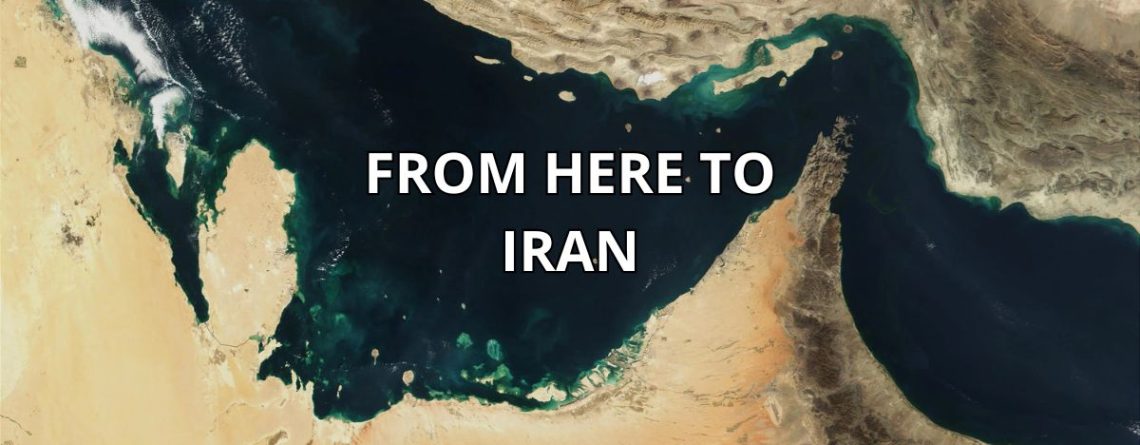
There was one group that facilitated this as it relates to the Middle East in extreme, the government of Iran.
That government is now collapsing (if it hasn’t already collapsed by the time you read this). Through a direct military strike, Khamenei has been escorted off the battlefield.
His replacement was also condemned to the same fate a few hours later.
It’s not a good time to be a mullah evidently.
What will transpire… where the Middle East will go… that is anybody’s guess. At least we can say conclusively: It won’t be any worse.




Comments (2)
Once again, reality has challenged our reality. This is the lesson of life. Don’t be too complacent, don’t be too confident. I would like to prognosticate more, however, the current world situation(s) leaves me feeling as though I am insignificant in the discussion, and I’ve learned through experience, that if I don’t have the required knowledge or information, it’s best just to listen, learn, and take in the information, unless someone asks for my opinion. And then it is only my opinion. I have more questions than answers. The current events are big, and I pray for a positive outcome, in a negative situation. I am still a “glass is half full” mentality, and when the wounds heal, I believe we will be in a better place; maybe even heaven! 🙂
Your last sentence, “…It won’t be any worse.” My question is, “For whom?”